
2026-09-19 · Dale Branson
Why Is My Water Heater Making Popping or Rumbling Noises?
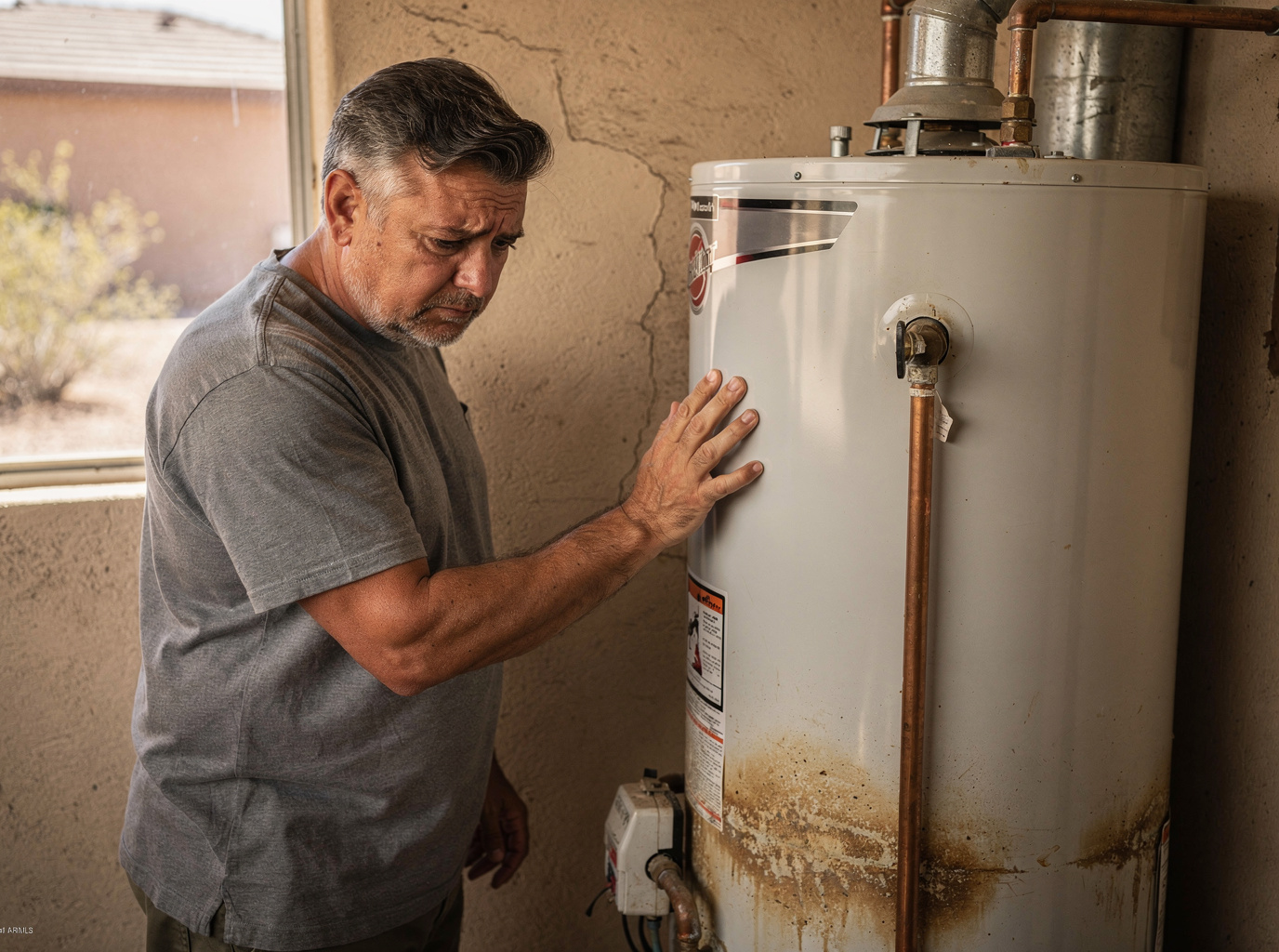
Popping or rumbling noises from a water heater typically result from sediment buildup heating and expanding at the tank bottom, a common occurrence in Bullhead City homes where mineral-rich groundwater leaves deposits faster than in softer-water regions.
Sediment Buildup as the Primary Cause
Hard water drawn from the Colorado River and local wells carries high levels of calcium and magnesium that settle inside the tank over time. As the burner or heating element warms this layer, steam bubbles form and collapse, producing the distinct popping and rumbling. In neighborhoods such as Fort Mohave and Mohave Valley, homes built before 2005 often retain 40- or 50-gallon tanks that have never been flushed, allowing layers several inches thick to develop. These deposits also reduce efficiency and can shorten tank life by several years compared with regularly maintained units.
Arizona Climate and Water Conditions
Bullhead City summers push groundwater temperatures higher, which speeds mineral precipitation inside tanks. During the brief winter months when overnight lows dip, the temperature differential between incoming cold water and the heated tank increases scaling. Residents in Sunridge Estates and Desert Foothills Estates report the same noise patterns after five to seven years of service because the arid climate concentrates minerals in the supply. This regional water chemistry makes routine flushing more critical here than in coastal or northern states.
How Tank Age and Housing Stock Affect Noises
Many single-family homes in Riviera and Laughlin Ranch still operate original tanks installed during the 1990s housing expansion. After eight to twelve years, the anode rod is depleted and sediment has compacted, turning minor hissing into loud rumbling during recovery cycles. Electric models common in Palo Verde Meadows show the same symptoms when lower elements become coated. Property managers overseeing rentals in Arroyo Vista Estates note that tenants first complain about the sounds before efficiency drops become noticeable on utility bills.
When to Flush Versus When to Replace
A single flush often quiets a tank for several months, yet repeated rumbling after flushing indicates the sediment bed is too thick for simple removal. In such cases, replacement with a new unit sized correctly for household demand prevents ongoing issues. Homeowners can review the guide on When Should a Water Heater Be Flushed? to time maintenance correctly. If leaks accompany the noises, the article Leaking Water Heater: Repair or Replace? outlines decision factors specific to Arizona installations.
Practical Next Steps for Local Homeowners
Start by noting whether the sounds occur only during heavy hot-water use or constantly. Shut off power or gas and drain several gallons from the tank to check sediment color and volume. If the water runs cloudy with grit, schedule professional flushing through Water Heater Maintenance & Flushing. Persistent noises after service usually mean the tank has reached the end of reliable service life and should be replaced before a leak develops in the weakened bottom.